
Weak PMI gives rise to fears of sub-8 per cent economic growth for the third quarter in a row.

Firms seem to have adopted a wait-and-see approach on their plans until public policies become clearer upon the formation of a government.
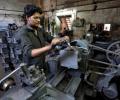
India's industrial production growth rose marginally to 5.6 per cent in February from 5.5 per cent in January 2023, mainly due to good performance of the power, mining and manufacturing sectors, according to official data released on Wednesday. There was an improvement on an annual as well as sequential basis. The factory output growth measured in terms of the Index of Industrial Production (IIP) stood at 1.2 per cent in February 2022.
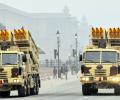
'If you take any ministry of defence project, Nibe is up there, getting orders.'
'As long as ASUS continues to introduce new products into the market, we still have a chance to grow our business in India.'

The manufacturing output, which constitutes around 80 per cent of the index of industrial production, grew 12.3 per cent in May against 1.8 per cent in same month last year, official data released on Monday said.
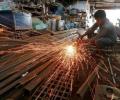
The expansion in total new orders was supported by greater sales to international markets

A reading above 50 indicates expansion, while a score below this mark means contraction
The country's manufacturing sector activity grew at the slowest rate in four months during March, hampered by softer rises in new business as international demand faltered owing to the coronavirus pandemic, a monthly survey said on Thursday. The headline seasonally adjusted IHS Markit India Manufacturing PMI fell to 51.8 in March, from 54.5 in February, signalling the slowest improvement in business conditions since November 2019. This is the 32nd consecutive month that the manufacturing PMI has remained above the 50-point mark.

Inflation in India probably edged up in October as food prices climbed while weak demand is expected to have hurt factory output growth.
As per data released by the government on Monday, industrial output grew by 3.5 per cent in the April-October period this fiscal, as against 8.7 per cent in the same period last year.
For the April-January period of 2012-13 fiscal, the industrial production growth is at 1 per cent, down from 3.4 per cent in the same period of 2011-12, according to official data released in New Delhi on Tuesday.
The index has remained above the 50-mark, below which it indicates contraction, for more than three years now.
The Index of Industrial Production, which measures the industrial growth, for July is scheduled to be released by the government on Friday.

India's services activity expanded at the fastest rate in a year during February, while employment fell further and companies noted the sharpest rise in overall expenses, a monthly survey said on Wednesday. The seasonally adjusted India Services Business Activity Index rose from 52.8 in January to 55.3 in February, pointing to the sharpest rate of expansion in output in a year amid improved demand and more favourable market conditions. The index was above the critical 50 mark that separates growth from contraction for the fifth month in a row during February as the roll-out of COVID-19 vaccines led to an improvement in business confidence towards growth prospects.

In terms of industries, 16 out of 23 industry groups in the manufacturing sector have shown positive growth during December 2017 as compared to the same month year ago.

India's industrial production growth perked up slightly to 5.2 per cent in January from 4.7 per cent in December 2022, mainly due to good performance of the power, mining and manufacturing sectors, according to official data released on Friday. There was an improvement on an annual as well as sequential basis. The factory output growth measured in terms of the Index of Industrial Production (IIP) stood at two per cent in January 2022.
India's services sector activities improved further and expanded at strongest rate in over 11 years in May, supported by a substantial pick-up in new business growth, even as input cost inflation climbed to a record high, a monthly survey said on Friday. The seasonally adjusted S&P Global India Services PMI Business Activity Index jumped to 58.9 in May, up from 57.9 in April, amid better underlying demand and strong inflows of new work. For the tenth straight month, the services sector witnessed an expansion in output.

Bolstered by improved domestic demand, India's services sector expanded for the fourth consecutive month in January as business activities quickened and rising business optimism is set to sustain the growth momentum, a monthly survey said on Wednesday. The seasonally-adjusted India Services Business Activity Index rose from 52.3 in December to 52.8 in January, pointing to a quicker expansion in output. The index was above the critical 50 mark that separates growth from contraction for the fourth month in a row during January.
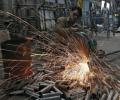
Manufacturing growth in India lost momentum in February.

The strong message from the prime minister is of continuity of policies he considers right with strong emphasis on execution, points out T N C Rajagopalan.

The HSBC India Manufacturing Purchasing Managers' Index -- a measure of factory production -- stood at 54.7 in December, up from 53.7 in November, indicating a further improvement in the health of the Indian manufacturing sector.

Power generation grew by 14.6 per cent in November.

Uttarakhand saw the sharpest decline (of 11 per cent) in the "total persons engaged" in manufacturing in the worst-hit pandemic year of 2020-21 as industrial units shut shop, according to the latest Annual Survey of Industries (ASI) data, released by the Ministry of Statistics and Programme Implementation (MoSPI). This was followed by the decline in the workforce in states such as Jharkhand (8.9 per cent), West Bengal (8.3 per cent), Kerala (8 per cent), and Karnataka (7.8 per cent). The "total persons engaged" in an enterprise is defined as the sum of directly employed workers, supervisory or managerial workers, and the unpaid family members who might be engaged in the enterprise.

During April-February, industrial output grew at 2.6 per cent compared with a growth of 2.8 per cent in the year-ago period.

The record contraction in the growth rate of eight core sectors will have its impact on IIP.

India's annual industrial output growth slowed to 4.2 per cent in July compared with an upwardly revised 4.4 per cent growth a month ago, government data showed on Friday.
Dixon Technologies' January-March quarter (Q4) results came in well below expectations, but the potential for signing up a new mobile client, and plans for backward integration into display manufacturing kept investors happy. Dixon's Q4FY24 revenue grew 52 per cent year-on-year (Y-o-Y) to Rs 4,660 crore, below Street consensus, due to weakness in consumer electronics (Rs 890 crore) and home appliances (Rs 294 crore) segments.

On price rise, HSBC said that the rate of cost inflation decelerated sharply while output prices were unchanged.
The index had registered a growth of 2.8 per cent in January 2015.

India's services sector remained in contraction territory for the third straight month in July, as business activity, new orders and employment declined further largely due to the COVID-19 pandemic and local restrictions, a monthly survey said on Wednesday. The seasonally adjusted India Services Business Activity Index rose from 41.2 in June to 45.4 in July, but was stuck in the red due to subdued demand conditions amid the COVID-19 crisis. In Purchasing Managers' Index (PMI) parlance, a print above 50 means expansion, while a score below 50 denotes contraction.

Production of coal, crude oil, natural gas, refinery products, fertiliser, steel, cement and electricity contracted. The record contraction in the growth rate of eight core sectors will affect the Index of Industrial Production.

Industrial production was seen growing 1.8 per cent from a year earlier in July, slower than June's 3.4 per cent increase, according to the median consensus in a poll of 31 economists.

The HSBC India Composite Output Index, which maps both services and manufacturing, increased from 48.9 in March to 49.5 in April, but remained below the crucial 50 mark which indicates contraction for the second successive month.

During March, the rate of inflation slowed to the weakest in four months and was below the long-run survey average
The positive numbers raises hopes of recovery.

The Nikkei India Manufacturing PMI dipped from 50.3 in November to 49.1 in December.

Chief Economic Advisor V Anantha Nageswaran on Thursday said the economy is expected to grow at 6.5 per cent in the current fiscal notwithstanding deficient rains in August. India recorded economic growth of 7.8 per cent in the April-June quarter of 2023-24 against 13.1 per cent in the year-ago period. India's economy in Q1 grew at the fastest pace in a year, on the shoulders of a boost in capital expenditure both at central and state levels, along with stronger consumption demand, especially in rural areas, and improved performance in the services sector, he said.
The index, based on a survey of 500 companies, rose to 57.2 in October from 55.1 in the previous month and 57.2 in August. October was the 19th consecutive month in which the index has risen.

Auto manufacturers have focused on launching CNG variants of their popular models to meet consumer demand for vehicles with lower running costs.
